

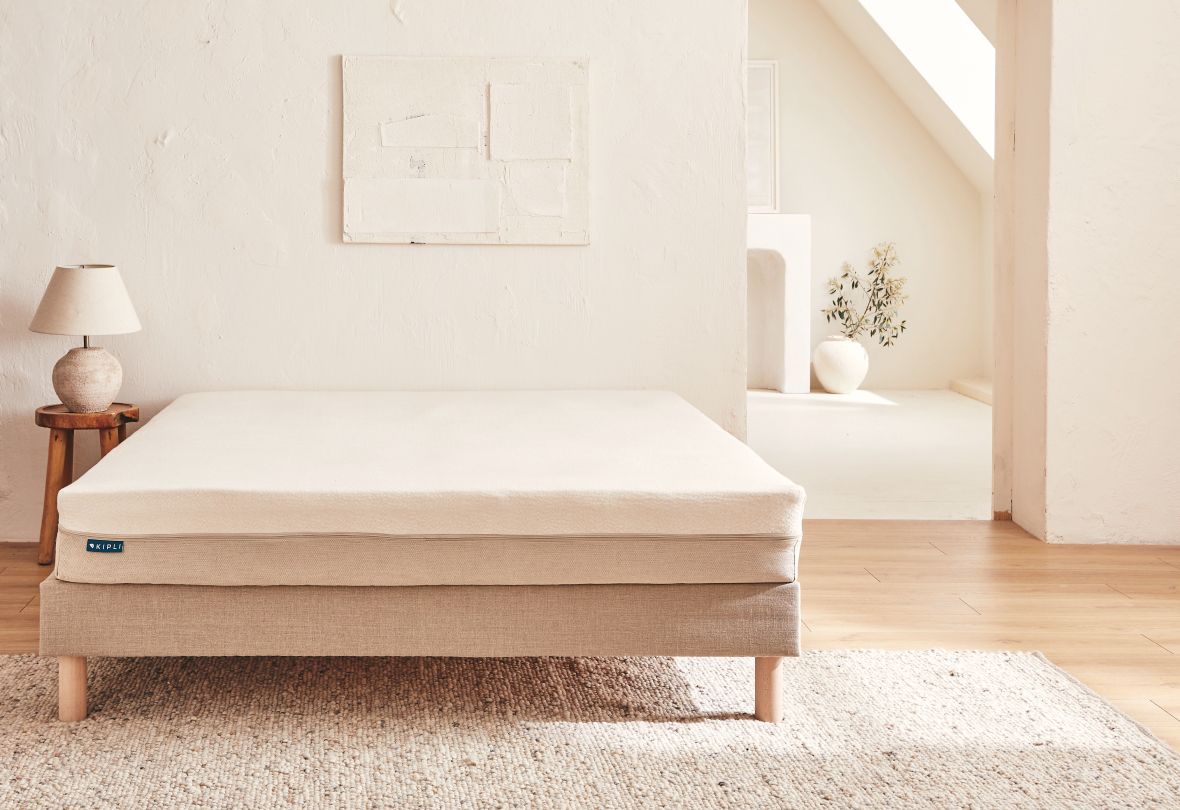
What factors should you consider when choosing between a wool mattress and a foam mattress?
Choosing a mattress is an important step that can affect not only our sleep but also our mood for the day. There are also many different mattress lines available, which doesn’t make the task any easier for consumers. So, should you choose a wool or foam mattress? Can their composition make a difference? Is price a factor to consider? Will their durability, firmness, or even their environmental footprint influence your final decision?
Here is our comparison tool to help you choose between a wool mattress and a foam mattress.

What are wool and foam mattresses made of?
A foam mattress is created through a chemical reaction between diisocyanates and various polyols. It is worth noting that these two components are primarily derived from petroleum and chemical processes. This is also why the quality of polyurethane foams can vary greatly.
As you move up the price range, you gradually find higher-quality foams made from so-called “greener” materials. These may contain:
- fewer or no VOCs (volatile organic compounds);
- vegetable oils (soybean, castor, etc.), which will replace some petrochemicals.
It is important to keep in mind that even if a foam mattress is manufactured by well-known local companies, and even if all of its components are also well-known, it is still a synthetic filling that can have an impact on both the user and the environment.
However, a wool mattress is manufactured using a well-established process, and its filling is much more natural. In France, there are two types of filling used for this kind of mattress:
- a filling made entirely of sheep's wool;
- a blend of sheep's wool and horsehair (a material that used to be very inexpensive).
Wool mattresses contain no harmful substances, including neither Volatile Organic Compounds (VOCs) nor flame retardants (which may contain endocrine disruptors).
What factors can affect the price of a wool or foam mattress?
Depending on the level of comfort and feel, the price of a mattress can vary, whether it is made of wool or foam.
However, the most significant price differences are found among foam mattresses. For example, a 140 x 190 cm foam mattress can cost anywhere from 100 to 2,200 euros. Generally speaking, though, the higher the price, the greater the comfort and quality tend to be.
Manufacturers have made significant investments in foam mattresses, particularly in research and development. This has led to notable innovations that have helped close the gap with other technologies. All of this has been achieved while also lowering manufacturing costs.
Wool mattresses (whether organic or not) are more “mature” products than foam mattresses. The price differences between them are therefore much less pronounced: these products have stood the test of time to achieve near-perfect quality. A wool mattress is a safe bet.
Other factors that may influence the choice between a wool mattress and a foam mattress
When it comes to firmness, the range of options is much wider for wool mattresses: they can be made to range from the softest to the firmest.
When it comes to combating night sweats, wool mattresses remain the most effective option thanks to their unique properties. Specifically, their thermal insulation and moisture-regulating capabilities are superior to those of foam mattresses.
In terms of durability, foam mattresses have a shorter lifespan than wool mattresses. Foam wears out quickly and hardens over time, which can contribute to back pain.
How much sleep comfort does a wool mattress provide?
Compared to a foam mattress, a wool mattress offers many advantages that will have a positive impact on comfort:
- Its ability to regulate humidity and its thermal insulation keep the bedding warm in winter and cool in summer, and even when the sleeper sweats, everything stays dry;
- its firmness level is adjustable;
- It feels cozy, because this type of mattress has a soft surface, whether it's firm or not;
- This type of mattress is usually custom-made and produced one at a time.
Mattress Manufacturing and Its Impact on the Environment
As noted above, foam mattresses have benefited from numerous innovations over time, which have made them less harmful to the environment and enhanced their various benefits. However, their environmental footprint remains quite poor. This is mainly due to several factors, including:
- the distance observed between the various areas where the raw materials used in these mattresses are extracted;
- the use of non-renewable fossil materials to manufacture the foam (in varying quantities, depending on the case);
- the extraction or production of its various derivatives;
- transport to the raw material processing warehouses;
- the shipment of foam to bedding manufacturing facilities (which may be located in France or abroad);
- the challenges related to waste management resulting from the manufacture of this product;
- the energy expended in the manufacturing process, as well as that generated throughout the entire value chain;
- the various packaging options available;
- the challenges encountered when recycling end-of-life materials;
- the limitations on potential outlets for recycling used foam.
All of these factors clearly demonstrate that foam is responsible for a large amount of CO2 emissions. And even though, indeed, a great deal of research has been conducted and significant progress has already been made to optimize the production of this type of mattress as much as possible, its carbon footprint remains very high—and notably much higher than that of a wool mattress.
We recommend these other pages: